
System 32 Cabinet Generator
Cabinet panels with the 32mm hole pattern already set out — shelf pins, hinge plates and all. Export a DXF for the CNC or a printable drilling drawing for the jig.
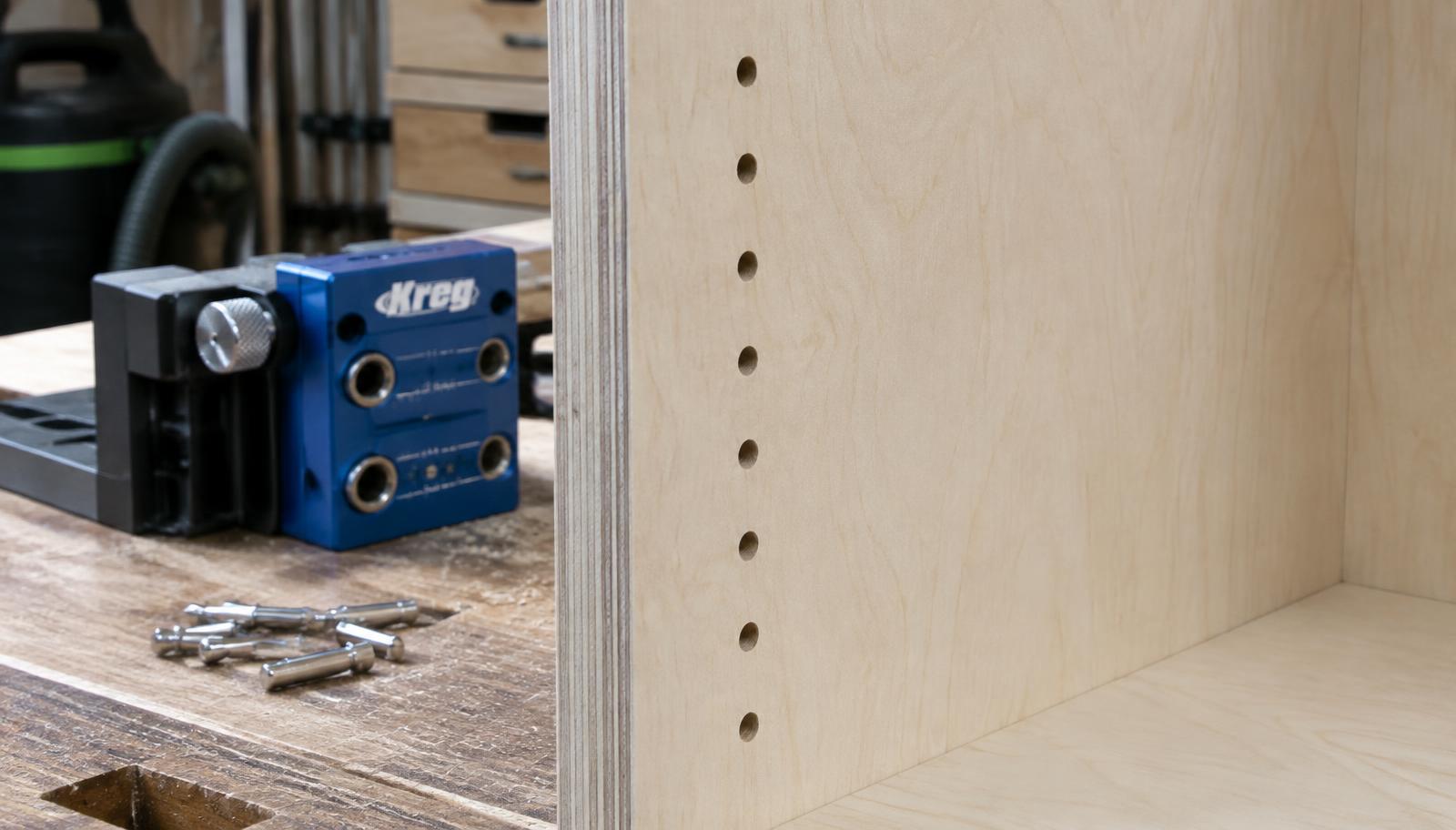
Try the configurator here:
System 32 is the reason a hinge plate, a drawer runner and a shelf pin from three different manufacturers all land on the same holes. Every fitting is designed around one vertical grid of 5mm holes spaced 32mm apart. Get the grid right and the hardware simply fits.
Setting that grid out by hand is slow and unforgiving. One row started 3mm low and every shelf in the cabinet sits crooked. This configurator places the pattern for you and exports it ready to drill.
The rules the pattern follows
- 32mm vertical spacing between hole centres, the whole height of the panel.
- 5mm diameter holes for standard shelf pins, drilled to a consistent depth rather than through the panel.
- A setback from the front edge — commonly 37mm — with a matching rear row so shelves are supported at both ends.
- Both rows aligned across the two side panels, so shelves sit level rather than tilted.
Cabinet hardware is built around this grid, which is why it is worth following even on a one-off shop cabinet.
Drilling the pattern
On a CNC
The exported DXF keeps the hole pattern on its own layer. Assign a drilling toolpath, set the depth from the note included in the file, and run it. Both side panels come out identical, which is the part that is hard to guarantee by hand.
With a shelf pin jig
Download the PDF and work from the dimensioned drawing. It gives you the first hole position and the spacing, so you can index a jig — a Kreg jig, an LR32 rail, or a shop-made strip — with confidence. Always reference the jig from the same edge on both panels; that single habit eliminates most out-of-level shelves.
Hinges and drawers on the same grid
Concealed hinge mounting plates and many drawer runner systems are drilled to the same 32mm grid, usually 37mm in from the front edge. Because the configurator lays out the cabinet as a whole, the hinge cup positions on the door and the pattern on the side panels are worked out together rather than separately.
Why 32mm
The standard came out of European cabinet factories in the middle of the last century, when multi-spindle line boring machines with heads fixed at 32mm centres made it the cheapest possible spacing to produce. It stuck, and now practically all cabinet hardware in Europe and much of it elsewhere is dimensioned around it.
Set out your panels
Enter your cabinet dimensions above, check the hole pattern in the 3D view, and download the files.